
2026-09-06 ·
Why Pine Needles and Leaves Clog North Carolina Gutters So Quickly
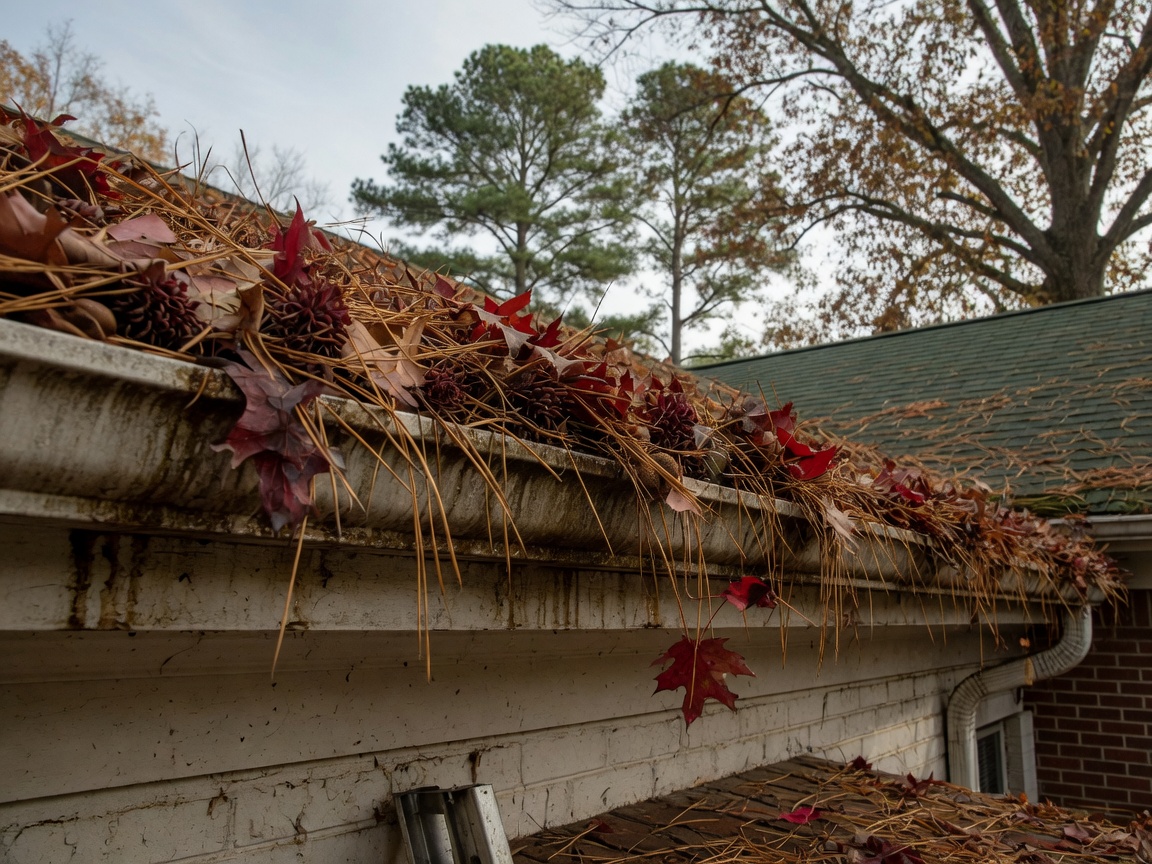
Pine needles and leaves clog North Carolina gutters quickly because dense stands of pine, oak, and maple trees drop heavy volumes of debris throughout the year, especially in Guilford County's mild winters that never fully halt leaf fall. In Greensboro the humid subtropical climate fuels rapid tree growth and extra needle production during hot summers, while frequent rain washes material straight into gutters before it can dry and blow away. Homes in older sections of Downtown Greensboro and Westerwood often sit under mature canopies that shed continuously, filling 5-inch and 6-inch gutters in just a few weeks during peak seasons.
Local Tree Cover and Debris Volume
Greensboro sits in the Piedmont where loblolly and shortleaf pines mix with hardwoods along streets in Sunset Hills and Lindley Park. These species release needles in steady showers rather than one big autumn drop, so gutters collect fine, interlocking material that packs tightly. A single mature pine can drop several bushels of needles between March and November. When combined with oak leaves that curl and trap water, the mix forms a dense mat that blocks flow even in moderate rain. Homeowners near the Greensboro Science Center notice faster buildup because the surrounding green space supplies constant wind-blown debris. The same pattern appears in Fisher Park, where canopy coverage exceeds 60 percent on many blocks.
Climate Patterns That Accelerate Clogging
Guilford County's humid subtropical conditions keep temperatures above freezing most winters, allowing leaves to remain wet and heavy instead of drying and scattering. Summer humidity and thunderstorms push extra organic matter off branches while downspouts struggle to handle sudden volumes. Mild winters mean two or three extra months of needle drop compared with colder mountain counties. This steady input overwhelms standard gutters on two-story homes common throughout the area. The pattern repeats in nearby Winston Salem, where similar tree cover and weather create parallel maintenance demands.
How Debris Moves Through Greensboro Homes
On properties in Westerwood and Lindley Park, roof valleys and low-pitch sections direct needles straight into gutters before wind can clear them. Downspouts at the rear of older homes often sit under heavy canopy, so material travels the full length of the run and packs at elbows. Once a clog forms, water backs up and lifts subsequent debris higher, creating a self-reinforcing blockage. This process repeats after every storm, turning a light covering into a solid plug within days. The result shows up as sagging sections and overflow stains on siding.
Why Standard Cleaning Intervals Fall Short
Many Greensboro homes require gutter cleaning every 6–8 weeks during spring and fall because of the continuous needle input. Waiting for a full seasonal clean allows the fine particles to compact under their own weight and moisture, making removal harder. Properties bordering the International Civil Rights Center & Museum area or the Coliseum green spaces face extra load from nearby trees. Skipping intervals leads to ice dams in rare cold snaps and foundation moisture issues after heavy summer rains. Consistent attention prevents these secondary problems from developing.
When Guards Become Necessary
Homeowners facing repeated clogs often install gutter guards to reduce the frequency of manual cleaning. Mesh and screen systems keep larger needles and leaves on top while still allowing water through, though they require occasional surface sweeping. In neighborhoods with heavy pine cover, guards cut maintenance visits roughly in half. They pair well with seamless gutters that eliminate seams where debris can catch. For readers noticing early signs of trouble, the article Why Are My Gutters Sagging, Leaking or Pulling Away From the House? explains the next stage of damage that follows unchecked buildup.