2026-09-06 ·
Why Are My Gutters Sagging, Leaking or Pulling Away From the House?
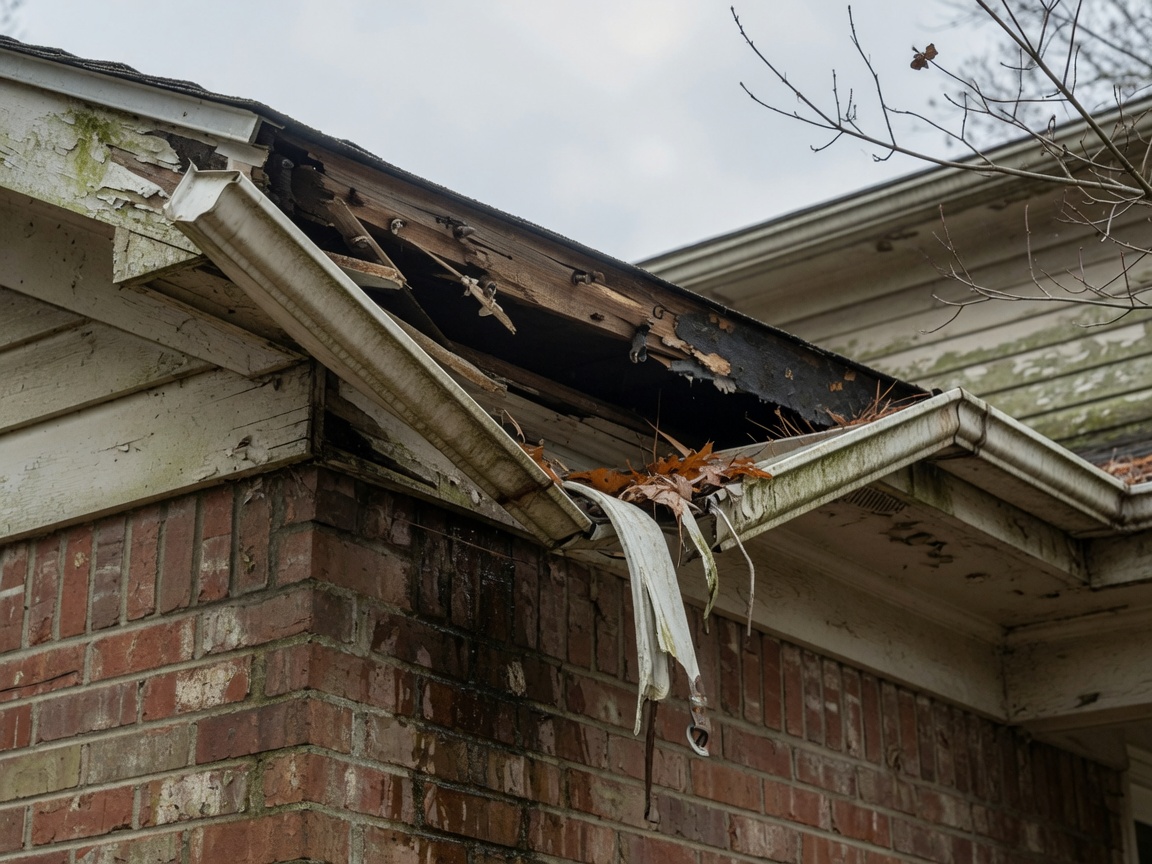
Gutters in Greensboro typically sag, leak, or pull away when debris accumulates faster than homeowners clear it, fascia boards rot from repeated moisture, or original installation left improper pitch, especially on homes built before the 1990s in neighborhoods such as Fisher Park and Westerwood.
Debris Buildup and Seasonal Clogging
Heavy leaf drop from mature trees common across Lindley Park and Sunset Hills combines with the humid subtropical climate to create persistent clogs. In Guilford County, spring pollen and fall oak and maple leaves pack 5- and 6-inch gutters within weeks, forcing water over the back edge and against the fascia. This constant saturation softens wood and loosens fasteners, causing the entire run to sag several inches at mid-span. Homeowners near the Greensboro Coliseum often notice the problem first after heavy summer thunderstorms dump two inches of rain in an hour. Regular clearing prevents the cycle, yet many properties go unchecked until leaks appear inside walls.
Fascia and Soffit Decay in Older Housing Stock
Many homes in Downtown Greensboro and Westerwood date to the 1920s through 1960s, when builders used untreated pine fascia that now shows widespread rot after decades of exposure. Once water sits behind sagging gutters, it migrates into the board, softening the material that holds the hangers. Within two to three seasons the brackets pull free, leaving visible gaps between gutter and house. The mild winters in Guilford County do little to dry the wood, so rot progresses year-round. Replacement of both fascia and gutters becomes necessary once decay extends beyond a single board; attempting to reattach to compromised wood only delays the inevitable failure.
Installation Slope and Hanger Problems
Gutters installed with less than 1/4-inch drop per 10 feet quickly collect standing water, especially on long runs common in ranch-style homes throughout Lindley Park. Over time the weight of water and debris stretches aluminum, creating visible belly spots that worsen leaks at seams. Inadequate hanger spacing—more than 24 inches apart—allows the front edge to droop under normal loads. Properties near the International Civil Rights Center & Museum frequently show this pattern because many were re-roofed in the 2000s without updating gutter pitch. Correcting slope during Gutter Replacement restores proper flow and prevents repeat sagging.
Local Climate Effects on Gutter Performance
Greensboro's hot summers expand metal seams while mild winters allow constant dampness that promotes rust at joints. Afternoon thunderstorms deliver intense but brief downpours that overwhelm undersized or clogged systems, pushing water behind the gutter and into siding. The same pattern affects homes as far as Winston Salem, where similar clay soils hold moisture against foundations. Over 8–12 years these cycles loosen spikes and drive screws, causing sections to separate from the house. Monitoring after each major rain event reveals early movement before full detachment occurs.
Practical Next Steps for Greensboro Homeowners
Start by inspecting from the ground after a rain for overflow or visible gaps, then check fascia condition at each hanger. If debris is the main issue, schedule Gutter Cleaning before the next season. When multiple sections sag or fascia shows soft spots, compare Gutter Repair vs. Gutter Replacement to determine the lasting fix. Tracking these problems against local weather patterns helps prioritize work before leaks reach interior walls. Skyway Gutter Pros serves Greensboro and across North Carolina with availability Monday through Saturday 7am–10pm and Sunday 8am–9pm.