
2026-09-06 ·
How North Carolina Weather Affects Your Gutters: Rain, Storms, Wind & Humidity
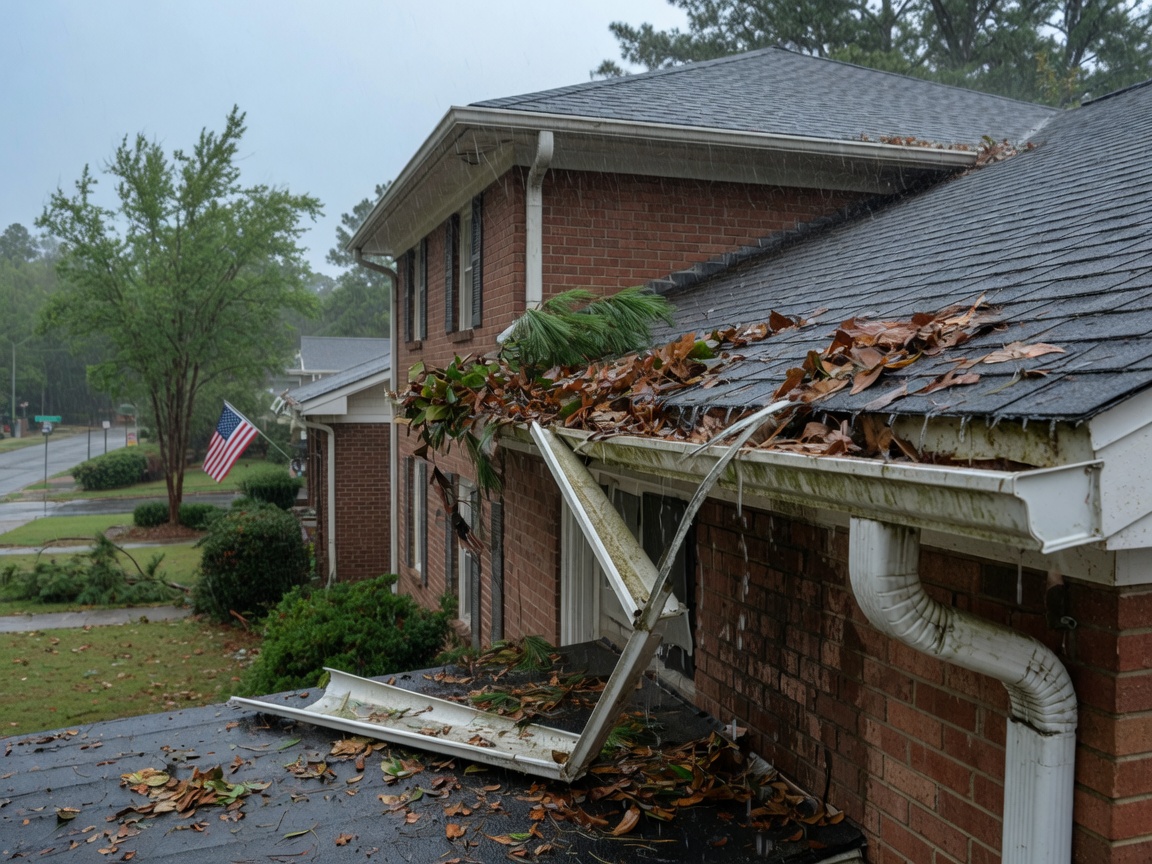
In Greensboro's humid subtropical climate, heavy summer rains often exceed standard gutter capacity in older homes throughout Fisher Park and Lindley Park, leading to overflow within minutes of intense downpours. Storms bring gusts that loosen fasteners on homes near the Greensboro Coliseum, while high humidity keeps debris damp and promotes algae that clogs downspouts faster than in drier parts of the state. These conditions shorten the time between cleanings and increase the chance of sagging in neighborhoods with mature trees.
Heavy Rainfall Patterns in Guilford County
Greensboro receives concentrated summer thunderstorms that drop large volumes of water in short periods. In areas like Westerwood and Sunset Hills, where many homes date from the mid-20th century, 5-inch gutters can fill and spill within 10-15 minutes during peak events. This repeated overflow saturates fascia boards and encourages water to seep behind siding. Homeowners in Downtown Greensboro often notice water pooling near foundations after these storms because older downspouts were sized for lighter rainfall loads. Regular inspection after each major event helps identify when seams begin to separate under the extra weight.
Wind and Storm Damage Across Greensboro
Thunderstorms that track through the Piedmont frequently produce straight-line winds capable of bending or detaching gutter sections. Properties near the International Civil Rights Center & Museum and the Greensboro Science Center sit in more exposed locations where wind funnels between buildings and amplifies pressure on end caps. In Lindley Park, tree branches broken during storms land directly in gutters, creating dams that force water over the sides. These impacts often appear first at corner miters and hanger brackets that have already loosened from previous seasons. Checking brackets after any storm with winds over 30 mph prevents small issues from becoming full separations.
Humidity, Algae and Debris Buildup
High humidity levels that persist from late spring through early fall keep leaves and pine needles moist long after they fall. In Fisher Park and Sunset Hills, this moisture supports algae growth along the inside of gutters, which then traps additional debris and narrows the flow path. The mild winters do little to dry out the system, so buildup continues year-round. Homeowners notice black streaks on the exterior of gutters and musty odors near downspouts when humidity stays elevated. Addressing the organic growth early reduces the frequency of complete blockages that lead to interior leaks.
Practical Steps for Local Homeowners
Schedule gutter cleaning after the heaviest summer rains and again before winter to remove accumulated material before it hardens. Consider rain gutter installation with larger 6-inch profiles on homes that experience repeated overflow. If sections already show separation, review the signs outlined in Why Are My Gutters Sagging, Leaking or Pulling Away From the House? to decide between repair and full replacement. Residents in nearby Winston-Salem face similar weather patterns and often compare notes on what has worked for their homes. Tracking costs over time using resources like Gutter Repair Cost in North Carolina: What Homeowners Should Expect to Pay helps budget for the extra maintenance these conditions require. Skyway Gutter Pros serves Greensboro & Across North Carolina Mon–Sat 7am–10pm, Sun 8am–9pm.