
2026-09-06 ·
Why Are My Gutters Overflowing Even When They Are Clean?
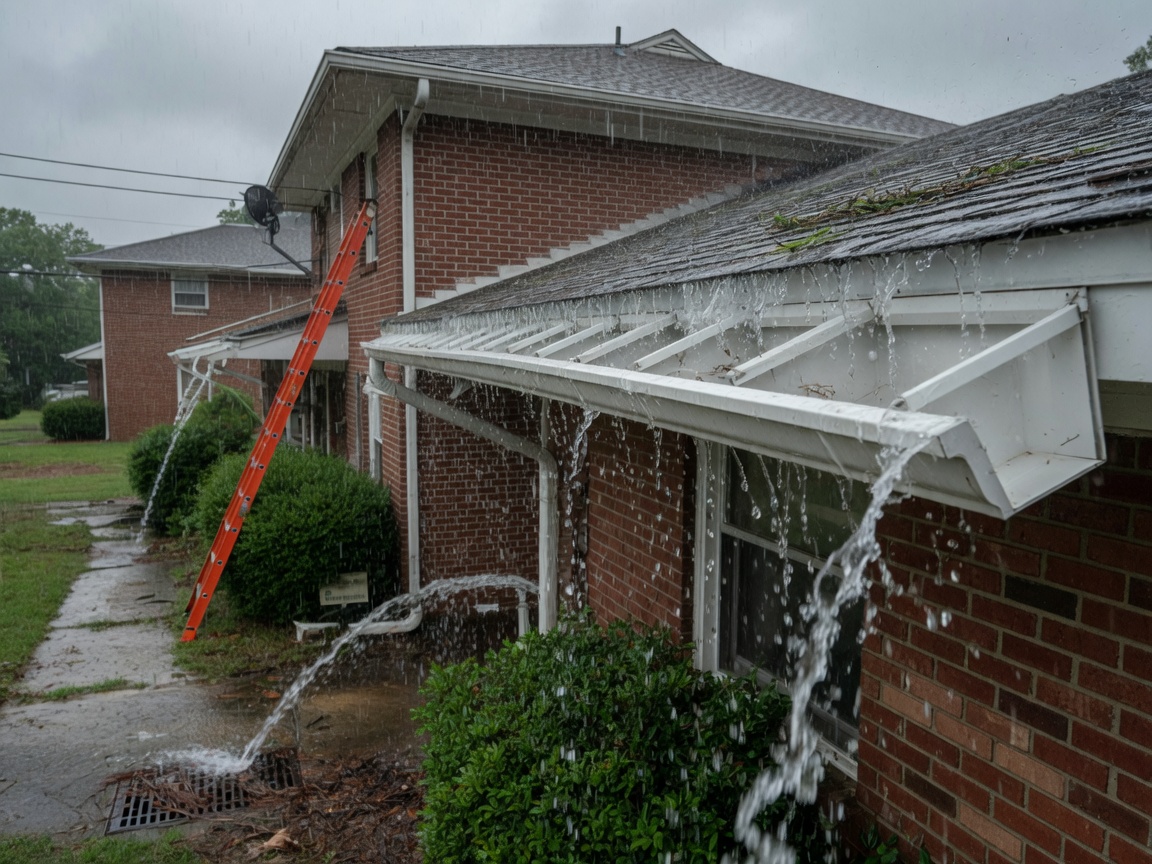
Even clean gutters overflow when the slope runs flat, downspouts clog below the visible line, or the troughs cannot handle peak rainfall on Guilford County roofs. These issues show up regularly in Downtown Greensboro and Fisher Park homes where original 5-inch systems meet modern storm intensity.
Slope and Pitch Problems
Flat or reversed pitch lets water pool and crest the front lip before it reaches the downspout. In Westerwood and Lindley Park, many 1950s–1970s homes settled unevenly, dropping one end of a run by half an inch over twenty feet. That small change stops flow during a summer cloudburst. Checking pitch requires a level and string line from the high point to the outlet; anything less than one-quarter inch per ten feet needs correction. Re-pitching often means removing the gutter, adjusting hangers, and reinstalling with proper fall toward the nearest downspout.
Downspout Blockages Below the Gutter
Leaves and silt can pack inside the elbow or extension pipe even when the trough itself looks clear. A single clogged 2x3 downspout on a Sunset Hills ranch can back water the full length of a sixty-foot run within minutes. Homeowners sometimes clear the open gutter then watch water still spill because the restriction sits at ground level or inside a buried extension. Flushing from the top with a garden hose while watching the exit point reveals these hidden stops. In older neighborhoods the extensions often terminate too close to the foundation, letting soil wash back into the pipe over time.
Undersized Gutters for Local Rainfall
Many homes in Fisher Park and around the Greensboro Coliseum still carry original 5-inch gutters sized for lighter historical storms. Today's 2-inch-per-hour downpours exceed that capacity on larger roof planes. Switching to 6-inch gutters or adding an extra downspout every twenty-five feet increases handling volume without replacing the entire system. Rain gutter installation crews measure roof square footage and local rainfall intensity before recommending size changes. Undersized sections also appear on additions where builders matched the old profile instead of calculating new drainage needs.
Sagging Sections and Hanger Failure
Wood fascia on homes built before 1980 can soften behind the gutter, allowing the trough to droop and create low spots. A sagging run holds standing water that eventually overflows the front edge even when no debris is present. In Lindley Park, crews often find hangers spaced four feet apart on older stock; modern practice calls for every two feet with screws into solid wood or rafter tails. Replacing a few hangers restores pitch without full replacement, but widespread fascia rot requires addressing the wood first.
Tree Cover and Seasonal Debris Patterns
Heavy oak and maple canopies in Sunset Hills and near the International Civil Rights Center & Museum drop fine debris that passes through some gutter screens yet still slows flow at the downspout strainer. Summer thunderstorms wash this material into the first elbow quickly. Homeowners who clean only the visible trough miss the material that re-accumulates within days after a storm. Installing gutter guards reduces the volume reaching the pipe but does not eliminate the need to verify pitch and outlet capacity remain adequate.
When Replacement Becomes the Practical Fix
If multiple sections show improper pitch, undersized troughs, or repeated hanger failure, piecemeal repairs rarely solve the overflow. Full seamless gutter replacement with correct size and spacing prevents the same issues from returning within a few seasons. Homeowners comparing options can review typical gutter repair cost in North Carolina ranges before deciding between repair and replacement. Proper sizing and pitch in Greensboro's humid subtropical climate keeps water moving even during the heaviest summer rains.