2026-09-06 ·
Gutter Problems After Heavy Rain: What North Carolina Homeowners Should Check
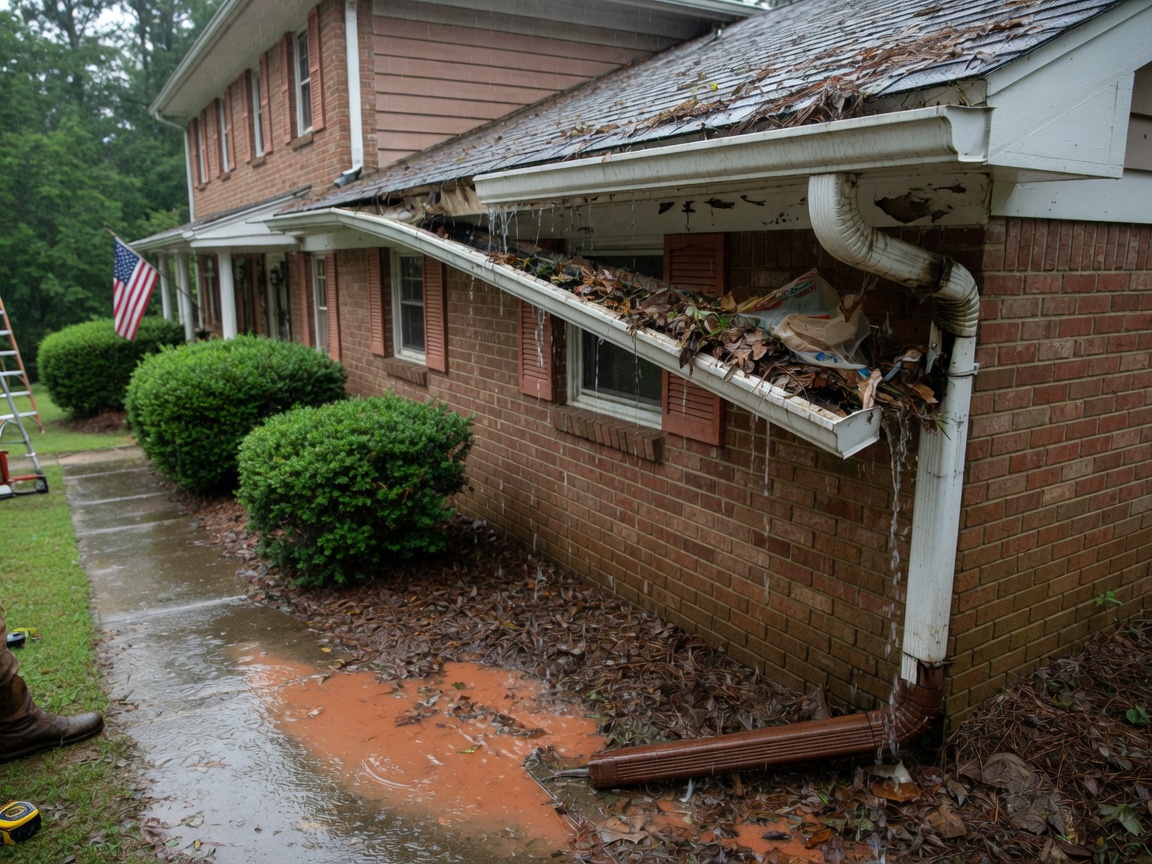
After heavy rain in Greensboro, the first issues to check are standing water in gutters, sagging sections, and overflow near foundations, as these appear within hours in Guilford County due to the humid subtropical climate and frequent downpours.
Checking for Clogs and Overflow
Heavy rains push leaves, pine needles, and pollen into gutters across neighborhoods like Fisher Park and Westerwood. In older housing stock common to these areas, even partial clogs cause water to spill over during storms. Walk the perimeter after rain stops and look for streaks on siding or wet soil directly below the gutter line. Downspouts in Sunset Hills homes often collect debris at elbows, slowing drainage. Clearing these prevents ice dams in mild winters and reduces mosquito breeding in standing water. Professional gutter cleaning restores flow without damaging older aluminum systems found on many pre-1980 homes.
Inspecting for Sagging and Loose Fasteners
Sagging appears quickly after heavy rain when brackets loosen on homes in Lindley Park and around the Greensboro Coliseum area. Check every 4 to 6 feet for separation between gutter and fascia, especially on two-story structures where wind-driven rain adds weight. In Guilford County, soil expansion during wet periods can shift foundations slightly, pulling hangers out of alignment. Use a level to confirm pitch toward downspouts; anything flatter than 1/4 inch per foot signals trouble. Tightening or replacing fasteners now stops full detachment during the next storm. If multiple sections show movement, emergency gutter repair prevents further damage.
Examining Foundation and Siding for Water Damage
Overflow from clogged or sagging gutters directs water against foundations in Westerwood and Downtown Greensboro homes. Check for new cracks, soil erosion, or damp basements within 48 hours of heavy rain. The humid subtropical pattern keeps soil saturated longer, increasing hydrostatic pressure on older brick and crawlspace foundations. Look for peeling paint or mildew on siding near gutter joints. Homes near the International Civil Rights Center & Museum often sit on lots with poor grading, making even small overflows problematic. Reading more on how clogged gutters damage foundations, roofs, or siding helps prioritize repairs.
Testing Downspouts and Extensions
Downspouts must move water at least 5 to 10 feet from the house after heavy rain. In Sunset Hills and Lindley Park, extensions often get buried by mulch or shifted by lawn equipment. Pour a bucket of water into the top and watch for backups at ground level. Corrugated extensions common on older Guilford County homes collapse under debris weight during storms. Straight, rigid extensions perform better in the region's frequent summer thunderstorms. If water pools within 3 feet of the foundation, replace or extend immediately to protect siding and landscaping.
Knowing When Professional Help Is Needed
Persistent issues after heavy rain, such as repeated overflow or visible rust on seams, indicate the need for assessment beyond basic checks. Homes in Fisher Park with original gutters often require rain gutter installation or seamless gutters to handle current rainfall volumes. Contact Skyway Gutter Pros serving Greensboro & Across North Carolina at Mon–Sat 7am–10pm or Sun 8am–9pm for inspections. Review typical gutter repair costs in North Carolina before scheduling so expectations match local conditions.