2026-09-06 ·
5-Inch vs. 6-Inch Gutters: Which Size Does Your North Carolina Home Need?
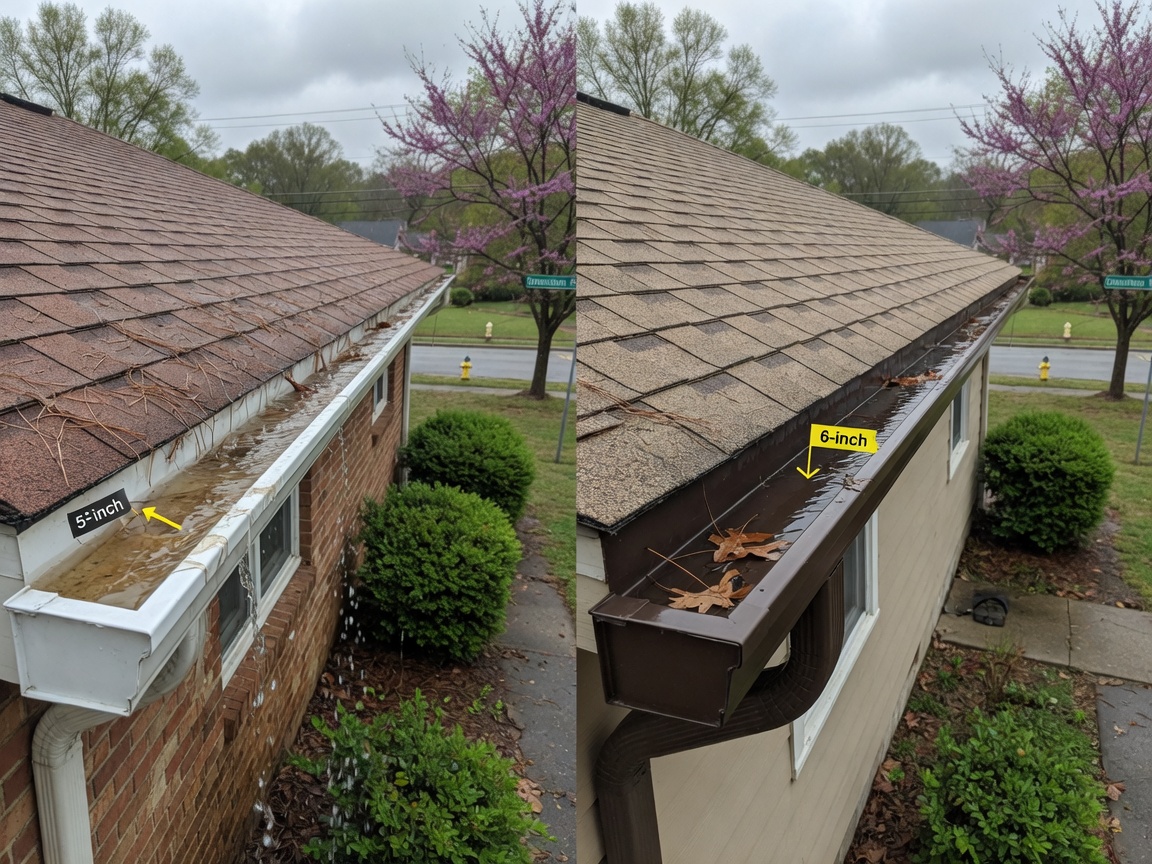
In Greensboro, 5-inch gutters work for the majority of homes while 6-inch gutters suit properties with larger roof surfaces or steep pitches that collect more water during intense summer storms.
Understanding Standard Gutter Dimensions
5-inch gutters measure 5 inches across the top and handle roughly 1.2 gallons per minute per linear foot under moderate flow. 6-inch gutters increase that capacity by about 30 percent, moving closer to 1.6 gallons per minute. In practice, a typical 2,000-square-foot ranch in Fisher Park sheds water at rates that 5-inch sections manage without overflow during most events, yet the same roof on a two-story home in Lindley Park with multiple valleys often exceeds that threshold once rainfall exceeds one inch per hour.
How Greensboro Climate Affects Flow Rates
Guilford County sits in a humid subtropical zone that brings frequent afternoon thunderstorms from May through September. These bursts can drop 1.5 to 2 inches in under 30 minutes, pushing water volume higher than milder winter rains. Homes near the Greensboro Coliseum or along the edges of Sunset Hills see more runoff because mature tree cover funnels additional debris and water into the system at once. 6-inch gutters reduce overflow risk on those days without requiring extra downspouts in most cases.
Roof Size and Pitch Considerations in Local Neighborhoods
Single-story homes built in the 1950s and 1960s throughout Westerwood and Downtown Greensboro usually feature roof areas under 2,500 square feet with moderate slopes that pair well with 5-inch gutters. Larger two-story or historic structures in Fisher Park often exceed 3,000 square feet and include multiple dormers, directing water into fewer collection points. Measuring the actual square footage and counting valleys helps determine whether the extra inch of width in a 6-inch system prevents backups during peak events.
When 6-Inch Gutters Provide Clear Advantages
Properties with roof pitches steeper than 8/12 or those that collect water from multiple stories benefit from the added capacity. In neighborhoods bordering Winston-Salem where lots slope toward the house, 6-inch gutters move water faster to downspouts and reduce the chance of fascia damage. The larger profile also accommodates Gutter Guards Installation without restricting flow as much as a 5-inch system would when leaves accumulate.
Installation Details That Influence Performance
Seamless construction remains the standard for both sizes because it eliminates joints that leak after freeze-thaw cycles in mild winters. Proper slope of one-quarter inch per 10 feet ensures water reaches downspouts before wind-driven rain can push it over the edge. Homeowners comparing options can review current pricing details in the How Much Do Gutters Cost in North Carolina? Cost Breakdown to see how material thickness and length affect totals for each size.
Matching Size to Your Specific Home
Walk the roofline and note the number of downspouts already in place. If existing 5-inch sections overflow during heavy rain, switching to 6-inch during Rain Gutter Installation often resolves the issue without adding more outlets. For homes in Lindley Park or Sunset Hills that sit under heavy tree canopy, the larger trough also gives more room for seasonal debris before flow is restricted. Checking actual roof square footage and observing water behavior during the next storm provides the clearest guidance on which size fits the property.